


The star has donated the entirety of his twenty-five thousand pound Mercury Prize prize money to the trust for venues, which works to preserve the United Kingdom's independent concert spaces.
He was given the cheque on mid-October as his latest record People Watching was chosen as the outstanding release of the last 12 months.
Fender has opted to give the cash to the Music Venues Trust, in acknowledgment of the crucial part grassroots venues played in his initial steps.
"I personally would not have achieved my current career if it wasn't for all the gigs I performed around the North East, and elsewhere, when I was starting out," stated Fender. "These locations are legendary, but they are facing challenges."
Beginning in 2023, at least 150 of these spaces have permanently closed – roughly 16% of the whole industry in the UK.
Over the past year, major artists like Pulp, the group Coldplay, the singer Katy Perry and Sheeran have all aided the Music Venues Trust in its attempts to keep the scene afloat, by applying a small levy to their admission fees, which benefits smaller concert halls.
Sam Fender also took part, generating more than £100,000 on his recent tour to help 38 grassroots venues across the UK.
These funds helped locations that were dealing with potential shutdown due to challenges arising from water damage, fire incidents and family tragedies, as well as regulatory hurdles, legal disputes and sound issues.
Additional spaces obtained financial assistance in modernizing infrastructure and sound and lighting systems that positively impacted artists and concertgoers.
"The concept that revenue from concerts in big venues helps the independent spots, where it kicks off for performers like me, is just common sense," the star has said.
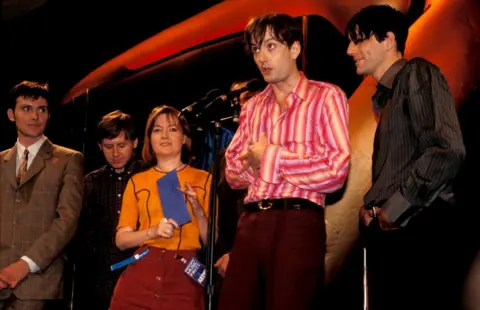
The musician is far from the only musician to donate his Mercury Prize funds to good deeds.
In Pulp earned the prize in 1996 for their album their work, lead singer Jarvis Cocker announced that the group would contribute their winnings to the non-profit the charity.
In 2002, artist Ms Dynamite split her award between a few organizations, such as the children's charity and a Sickle Cell organization.
"Additionally, I contributed a thousand pounds to the center, to their classes, because I practiced gymnastics when I was growing up and they required better apparatus," the artist explained to a publication.
Previously, they donated their funds to the community center that nurtured their act, in addition to other grassroots music organisations.
And winners that year they contributed their winnings to a MS organization after a acquaintance was identified with the condition.
"Winning was sufficient," remarked artist Heather Small. "The cash was the cherry on top but we could do without the extra, because we had the cake. So our success impacted somebody else's life."
Recently, the trust shared it had saved a couple of grassroots venues in that region, by transferring them to community ownership.
One venue in the city and the second in Bristol were bought under the community ownership scheme, which is backed by Arts Council England and music fans who purchase "ownership units" in the buildings.

